



News
Single pellet machine and double configurations shape feed capacity, process continuity, and investment efficiency across modern poultry production systems.
Feed output, pellet consistency, energy utilization, and operating schedules determine whether additional pelletizing capacity creates measurable commercial value.
Chicken houses requiring approximately 4.0–5.5 tonnes of daily feed need balanced processing, cooling, storage, conveying, and automatic feeding arrangements.
Equipment selection also affects expansion planning, maintenance cycles, installation space, and integration with complete poultry equipment systems.
Technical sizing based on flock population, feed formulation, operating hours, and future demand creates a stronger foundation for profitable poultry production projects.
Get professional poultry farm construction guidance, equipment selection solutions, and the latest price lists, whatsApp to +8618830120193, click to learn more:
Speed Is More Than Pellet Output
Modern poultry farms need reliable feed production because daily feeding schedules depend on continuous material availability.
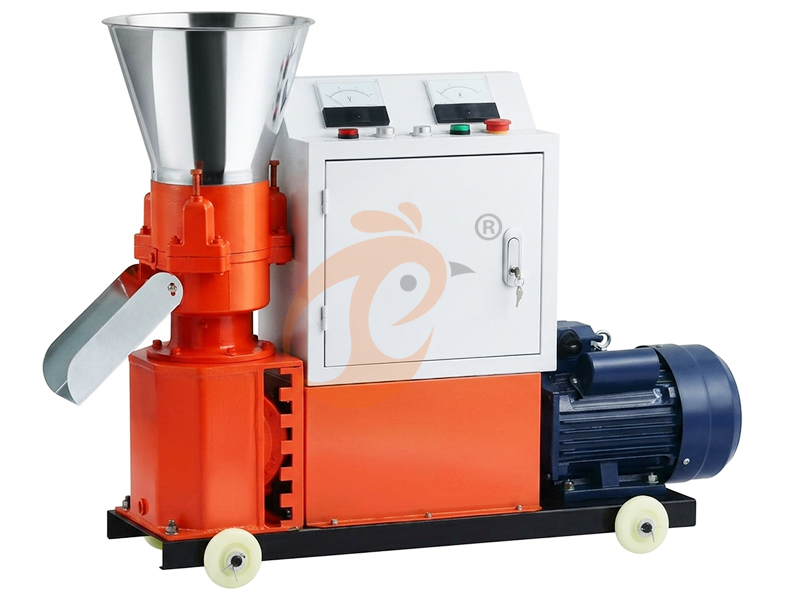
A single pellet machine concentrates processing through one pelletizing unit, while a double pellet machine provides two coordinated pelletizing sections for larger production requirements.
Feed formulas containing approximately 12%–16% crude protein can require careful conditioning and compression control to maintain stable pellet formation.
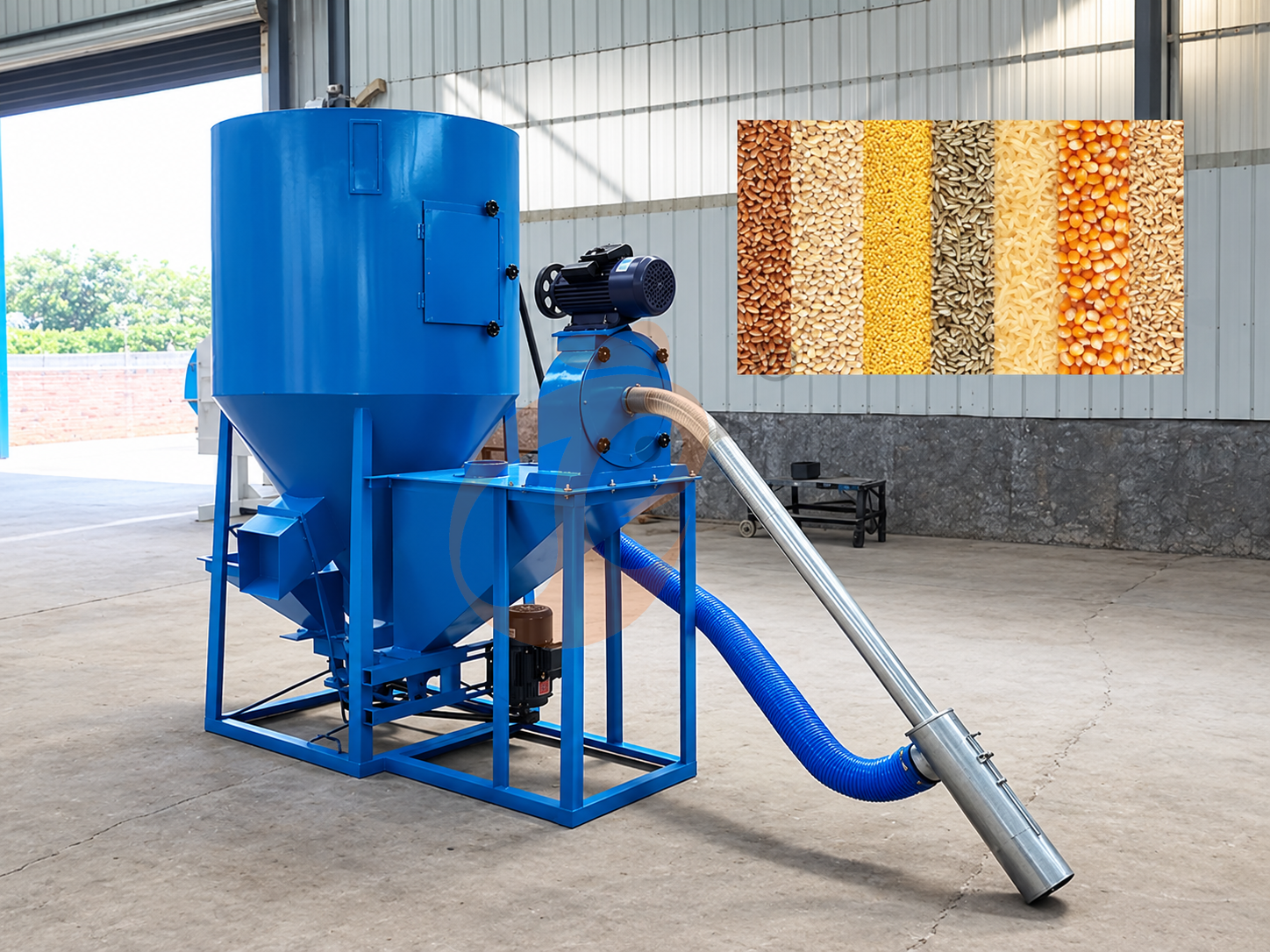
For chicken-house expansion projects, poultry feed pellet machine selection should therefore consider production capacity together with storage, conveying, cooling, and automatic feeding requirements.
Our poultry equipment solutions connect feed-processing machinery with chicken-house infrastructure, creating a coordinated technical foundation for commercial poultry production.
Single Vs Double Pellet Machine: At-A-Glance Comparison
Data is for reference only.Swipe horizontally to view full table.
Machine configuration directly affects how a feed-production section fits into a poultry project.
A single pellet machine can suit farms requiring a compact processing arrangement, while a double pellet machine can support larger feed-production layouts.
Our engineering team evaluates flock population, formula characteristics, installation conditions, and planned production schedules before recommending a suitable configuration.
Why Production Speed Matters To Poultry Farms
Raw Materials → Conditioning → Pelletizing → Cooling → Screening → Storage → Automatic Feeding
Each processing stage must support the next stage without creating an unnecessary bottleneck.
A production line operating at approximately 2.5–3.5 t/h can process substantial feed quantities during scheduled operating periods.
A professionally configured poultry feed pellet machine also supports controlled material transfer toward storage and automatic feeding equipment.
For commercial chicken houses, consistent feed availability can be more valuable than simply pursuing maximum instantaneous output.
Capacity Comparison For Different Farm Scales
Data is for reference only.Swipe horizontally to view full table.
Capacity calculations should incorporate actual operating schedules rather than relying only on catalog specifications.
A single pellet machine can satisfy moderate feed demand when production windows are sufficiently long.
A double pellet machine can provide greater scheduling flexibility where multiple poultry houses share one feed-processing system.
Feed storage, cooling, screening, and conveying should also be sized around the selected production architecture.
Matching The Machine To The Chicken House
Farm Scenario
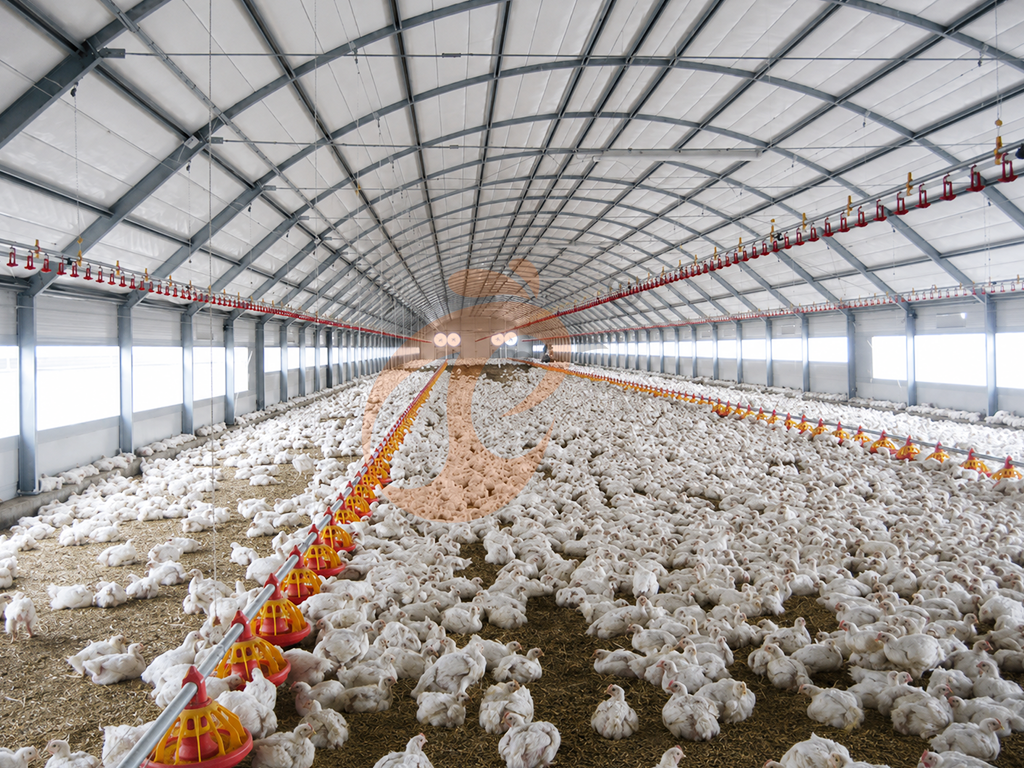
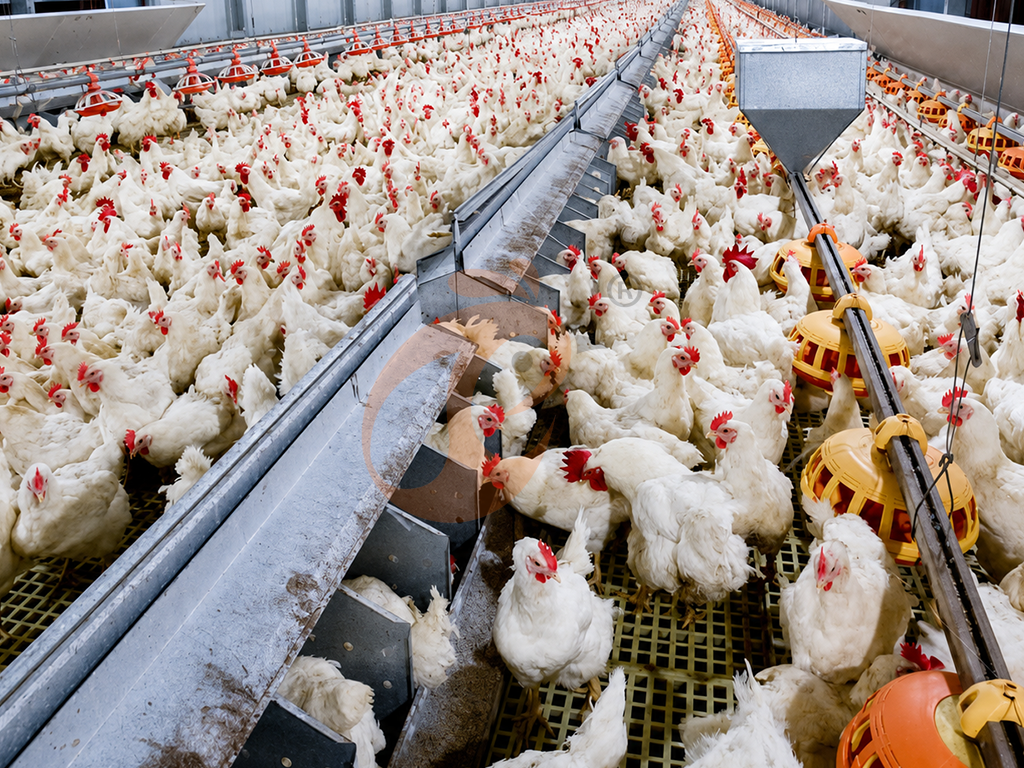
Consider a poultry project containing 40,000 broilers with daily feed demand of approximately 4.0–5.5 tonnes during a selected production period.
Processing capacity should be calculated against available operating hours, storage requirements, and automatic feeding schedules.
A poultry feed pellet machine designed for the actual farm cycle can reduce unnecessary idle capacity while maintaining sufficient feed availability.
Engineering Principle
Feed-processing capacity should follow the chicken-house production cycle, not simply the largest available machine specification.
Our equipment planning can coordinate pelletizing machinery with feed bins, auger conveyors, automatic feeding lines, ventilation systems, housing equipment, and manure-management systems.
Investment, Operating Cost, And Long-Term Value
Data is for reference only.Swipe horizontally to view full table.
Purchase investment represents only one part of a complete equipment evaluation.
Energy consumption, replacement intervals, bearing servicing, spare-parts planning, and annual utilization all influence long-term operating economics.
A single pellet machine can provide a practical economic structure where feed demand remains within a controlled processing schedule.
A double pellet machine can become more economical when sustained utilization justifies greater installed processing capability.
For projects involving commercial poultry houses, our engineering team can calculate equipment utilization according to expected production cycles and expansion requirements.
Pellet Quality: Production Speed Cannot Come At The Expense Of Feed Quality
Pellet output has limited value when excessive breakage creates additional fines during conveying, cooling, or storage.
A properly engineered poultry feed pellet machine should account for particle preparation, moisture distribution, conditioning, compression, and cooling.
Feed particle sizes around 0.8–2.5 mm can be considered according to formulation and final pellet requirements.
Steam conditioning temperatures around 75–85°C may be applied when formulation characteristics and process design require steam treatment.
Stable processing conditions help maintain consistent pellet characteristics for automatic poultry feeding systems.
When A Single Pellet Machine Is The Smarter Choice
Project Profile
A developing poultry farm may have controlled flock numbers, predictable feed consumption, limited installation space, and a phased expansion plan.
Under such conditions, a single pellet machine can provide a practical production foundation without unnecessarily increasing equipment complexity.
A system designed around 380 V, 50 Hz, three-phase power can fit many industrial electrical arrangements, subject to local engineering requirements.
Commercial Logic
Start with processing capacity that matches present demand, then reserve sufficient space and infrastructure for future expansion.
Such planning allows feed-processing investment to grow alongside chicken-house capacity.
When Double Pellet Machines Win
Data is for reference only.Swipe horizontally to view full table.
A double configuration becomes particularly valuable when several chicken houses share one centralized feed-production system.
For example, six houses containing 20,000 birds per house can create substantial synchronized feed requirements across multiple automatic feeding lines.
A double pellet machine provides additional processing flexibility for scheduled production, storage replenishment, and future poultry-house expansion.
Our engineering service can coordinate pelletizing capacity with feeding lines, storage equipment, cooling systems, and complete chicken-house infrastructure.
Five Technical Checks
Daily Feed Requirement
Calculate feed consumption according to flock population, age, breed, and production stage.
Layer operations may require approximately 105–120 g of feed per bird per day, depending on production conditions.
Production Schedule
A machine operating for 6 hours per day has different capacity requirements from equipment scheduled for extended daily production.
Expansion Plan
Calculate future feed demand before finalizing the equipment configuration when additional chicken houses are planned.
Feed Specification
Broiler starter, grower, finisher, and layer formulas may require different pellet diameters and processing conditions.
Complete System Balance
Mixing, conveying, cooling, screening, storage, and automatic feeding equipment must support the pelletizer's actual production flow.
From Pellet Production To Complete Poultry Equipment
Data is for reference only.Swipe horizontally to view full table.
System Architecture
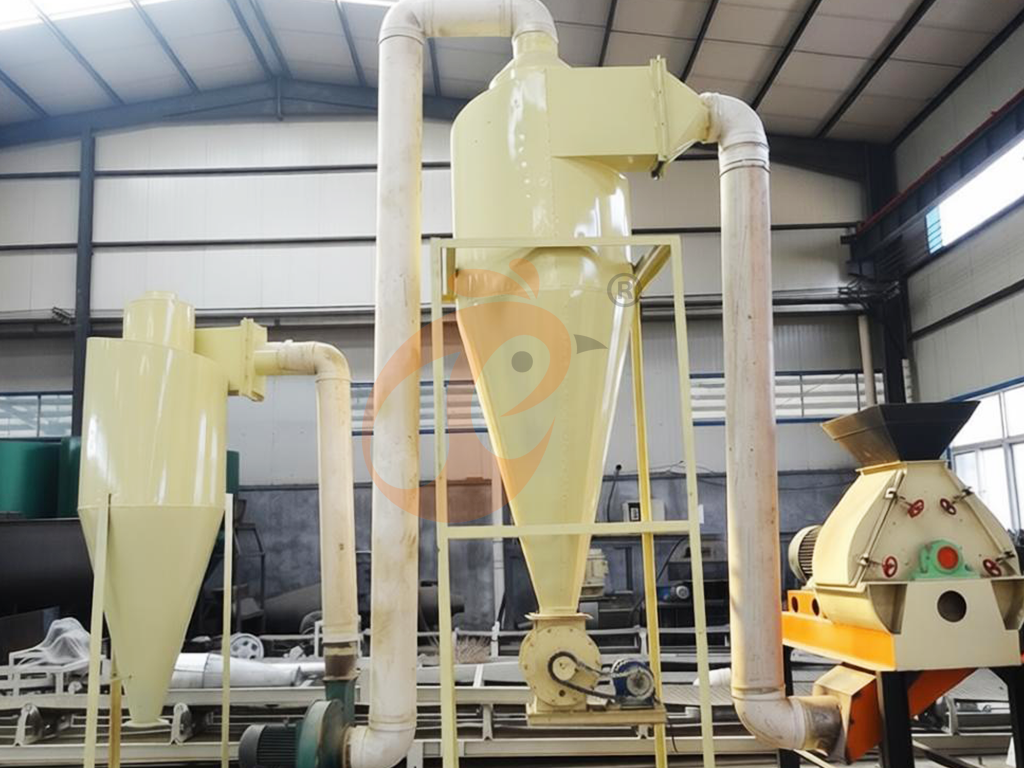
A poultry feed pellet machine should connect logically with feed mixing, conveying, cooling, storage, and automatic feeding equipment.
Chicken-House Integration
Feeding systems must correspond with house dimensions, bird population, feeding points, ventilation design, and manure-removal arrangements.
Project Engineering
Our poultry equipment solutions combine feed-processing machinery with chicken cages, automatic feeding, drinking systems, ventilation, cooling, environmental control, and manure-management equipment.
Commercial Application
Integrated planning helps reduce mismatched equipment specifications between the feed room and chicken-house operation.
Final Verdict: Single Or Double?
There is no universal winner because feed demand differs between poultry projects.
A single pellet machine is appropriate when daily requirements can be covered within the planned operating schedule and the project favors a compact processing layout.
A double pellet machine becomes strategically attractive when several poultry houses share feed production or when future expansion requires additional processing capacity.
The decisive calculation is the relationship between daily feed demand and available production hours.
For example, a requirement of 30 tonnes per day produces different equipment requirements when processing time changes from one operating schedule to another.
The strongest production strategy therefore combines feed demand, operating hours, material handling, storage, and automatic feeding requirements.
For new chicken houses or existing poultry-farm upgrades, our engineering team can evaluate flock population, feed consumption, house quantity, automation configuration, installation conditions, and expansion plans.
Proper pellet-machine selection can strengthen the complete production chain from feed manufacturing through automated poultry feeding.
Frequently Asked Questions
Q1: What is the main difference between single and double pellet machines?
A single configuration uses one pelletizing section, while a double configuration uses two coordinated pelletizing sections.
Selection should consider daily feed demand, operating hours, and future house expansion rather than machine quantity alone.
Q2: Which pellet machine is better for large poultry farms?
A double pellet machine generally provides a stronger configuration for projects with several chicken houses sharing centralized feed production.
For example, systems handling approximately 4.0–8.0 t/h can support substantially larger production schedules.
Q3: How should pellet machine capacity be matched with poultry equipment?
Feed production should be coordinated with mixers, coolers, storage bins, conveyors, and automatic feeding lines.
A balanced system prevents downstream equipment from becoming a processing bottleneck.
Taiyu (HK) Group - One Of China Largest Double Pellet Machine Supplier
Double pellet machine provides two coordinated pelletizing sections for commercial feed-processing projects, supporting integrated capacity planning from raw-material conditioning through finished-pellet handling.
Global factory direct sales connect poultry producers and project contractors with direct equipment manufacturing, technical configuration, production coordination, and export-oriented project support.
Poultry equipment covers chicken cages, automatic feeding systems, drinking systems, ventilation, cooling, manure removal, feed processing, and related farm infrastructure.
Turn-Key engineering coordinates equipment selection, layout planning, installation interfaces, commissioning requirements, and complete poultry-project implementation according to site conditions.
International project supply supports commercial poultry farms, agricultural investors, distributors, and integrated livestock projects requiring coordinated equipment specifications and engineering documentation.
Contact Us To Received Your Customized Poultry Farm Plan
Headquarters And Branchs
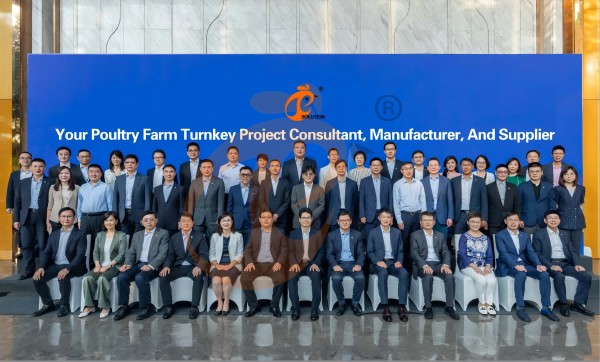
Hong Kong Headquarter Management Team
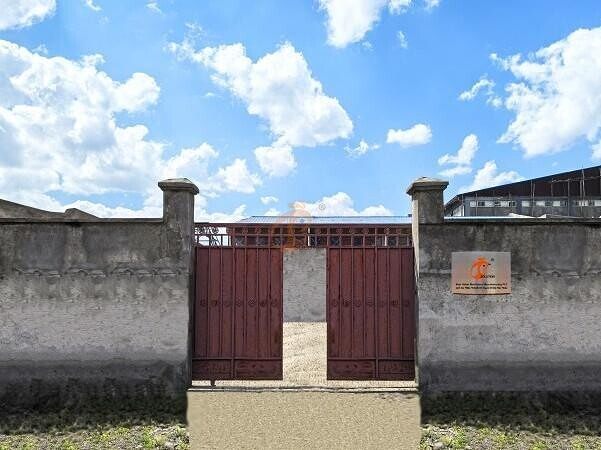
Hong Kong Headquarter Taiyu Industrial Group CO., LTD
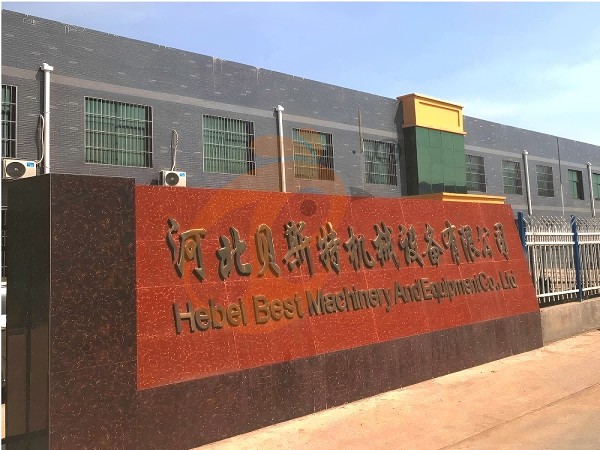
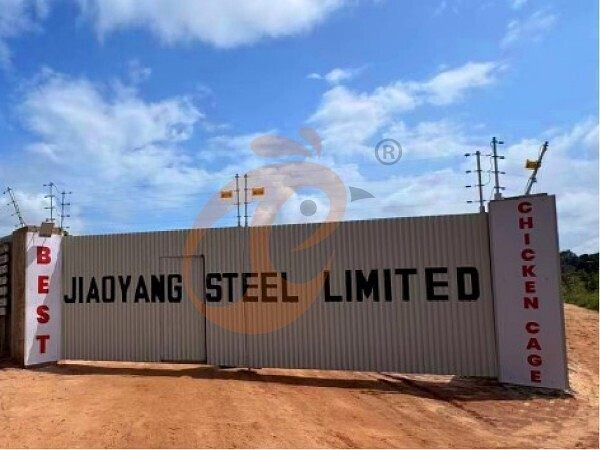
China Hebei Best Machinery And Equipment CO., LTD
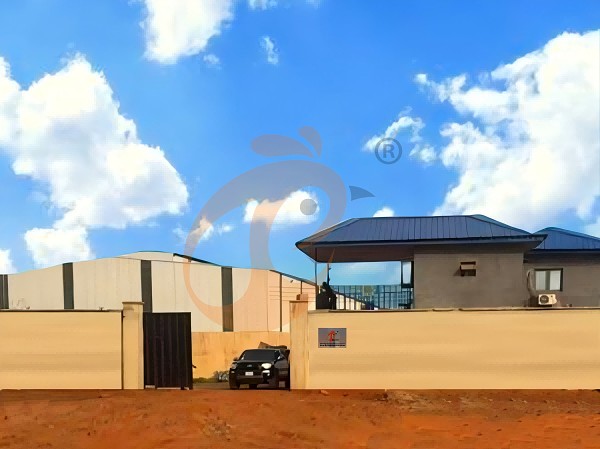
Nigeria Vanke Machinery And Equipment CO., LTD
Tanzania Best Machinery And Equipment CO., LTD
Ethiopia Best Hebei Machinery Manufacturing PLC
Reception /24 WhatsApp NO. : +8618830120193
FAQ
What Feeding System Standards Are Required For Pellet Machine In Poultry Chicken Feed Production Lines?
Feeder capacity is designed at 1.2–2.5 tons per hour depending on raw material density.
Flow consistency deviation is maintained within ±2% for uniform pellet quality output.
What Maintenance And Wear Part Replacement Standards Apply To Pellet Machine?
Bearing replacement intervals typically occur every 12–18 months under continuous operation.
Gearbox oil change frequency is maintained at 1000–1500 operating hours for system reliability.
What Safety Protection Systems Are Integrated In Pellet Machine For Poultry Chicken Feed Production?
Emergency stop response time is maintained within 0.5–1.0 seconds for operational safety.
Vibration monitoring limits are set at 4.5–6.0 mm/s to prevent mechanical failure.
- poultry equipment
- automatic feeding system
- chicken cage
- poultry farm
- poultry feeding system
- automatic poultry feeding system
- chicken house
- poultry house
- poultry feed pellet machine
- poultry equipment solutions
- poultry farm construction
- automatic poultry feeding
- poultry feed pellet machine design
- poultry equipment solution
- Tanzania
- Nigeria
Product Recommendations
 Unmatched Advantages Of Chicken Cage Systems In Southeast Asia | TaiyuExplore the advantage of chicken cage systems in Vietnam, Indonesia, Thailand, the Philippines, Malaysia, Myanmar, Cambodia, Laos, Singapore and Brunei.
Reception /WhatsApp NO. : +8618830120193.Read more Ultimate Advantages Of Chicken Battery Cage Technology In Africa | Taiyu5.Explore the advantage of chicken battery cage systems in Nigeria, Kenya, Ghana, Uganda, Tanzania, Zambia, Zimbabwe, South Africa, Egypt and Morocco.
Reception /WhatsApp NO. : +8618830120193.Read more Essential Advantage Of Chicken Battery Cage Farming In Latin America | TaiyuScale your farm in Latin America smoothly. Taiyu Group (HK) shows the advantage of chicken battery cage engineering for 1K-100K+ birds. Get a quote!
Reception /WhatsApp NO. : +8618830120193.Read more Unmatched Advantage Of Chicken Battery Cage Systems In Emerging MarketsAdvantage of battery cage systems helps farms in Africa, Southeast Asia, and Latin America overcome climate and disease challenges for 1K-100K+ birds. Inquire now!
Reception /WhatsApp NO. : +8618830120193.Read more Pellet Machine For Different Feeds | 5 Versatile Applications1. Feed pellet machines support versatile production across 5 feed categories
2. Appropriate die selection helps achieve specified pellet dimensions
3. Integrated preparation equipment improves material handling consistency
4. Cooling and screening support finished pellet quality control
5. Reception /WhatsApp NO. : +8618830120193Read more Floor Rearing System For Layers Price | 6 Key Cost Factors1. Floor rearing equipment coordinates feeding, drinking, nesting, ventilation, and egg collection
2. Automatic systems support consistent workflows across commercial poultry production environments
3. Engineered layouts improve access for inspection, cleaning, and routine maintenance
4. Technical specifications guide equipment selection and project integration
5. Reception /WhatsApp NO. : +8618830120193Read more Commercial Poultry Equipment ROI | 5 Proven Methods To Improve Profit1. Commercial poultry equipment supports more consistent feeding and drinking operations across modern farms
2. Automatic poultry feeding systems help manage feed delivery through coordinated conveying and distribution
3. Poultry ventilation fans support controlled airflow across changing seasonal conditions
4. Integrated equipment planning connects 3 essential systems for practical farm management
5. Reception /WhatsApp NO. : +8618830120193Read more How To Upgrade Traditional Egg Farms With Battery Cage For Layers Systems | 5 Steps1. Automatic feeding systems support consistent feed distribution across poultry houses.
2. Egg collection conveyors help transfer eggs toward centralized collection points.
3. Manure removal systems support routine poultry house waste management.
4. H-type layer cages provide structured layouts for commercial egg production.
5. Reception /WhatsApp NO. : +8618830120193Read more How To Upgrade Traditional Farms With Broiler Chicken Cage Systems | 5 Steps1. Modernize traditional farms with coordinated cage equipment
2. Improve daily operations through reliable automatic feeding
3. Maintain consistent water access with nipple drinking systems
4. Support environmental control with appropriately sized ventilation
5. Reception /WhatsApp NO. : +8618830120193Read more How To Choose Pellet Machine Die Type | 6 Practical Tips1. Die-hole diameter determines nominal pellet size and influences material flow
2. Compression ratio depends on effective hole length and diameter
3. Roller alignment and feed conditioning influence production stability
4. Routine inspection helps identify blockage, wear, and declining output
5. Reception /WhatsApp NO. : +8618830120193Read more Feed Mill Grinder Vs Pelleting | Which Improves Feed Quality?1. Grinding establishes ingredient particle distribution before mixing
2. Mixing distributes formulated nutrients across each batch
3. Conditioning prepares feed materials for pellet formation
4. Cooling stabilizes pellets before storage and packaging
5. Reception /WhatsApp NO. : +8618830120193Read more How To Customize H Type Chicken Battery Cages For Your Poultry Farm?1. H type cages integrate feeding, drinking, and manure removal
2. Cage dimensions determine cell layout and bird capacity
3. Ventilation requirements depend on stocking density and climate
4. Automated egg collection connects belts with conveying equipment
5. Reception /WhatsApp NO. : +8618830120193Read more A Type Battery Cage With Manure Belt Or Scraper: 5 Practical Selection Tips1. A Type battery cages support organized commercial layer housing systems
2. Manure belts transport waste toward designated collection points efficiently
3. Scrapers remove accumulated manure through compatible collection channels
4. Regular inspections help maintain equipment performance and operational reliability
5. Reception /WhatsApp NO. : +8618830120193Read more Deep Litter Layer Farming Cost | 5 Budget Factors1. House dimensions influence feeder placement and ventilation design
2. Feed distribution depends on line capacity and bird access
3. Drinking water pressure requires regular operational checks
4. Ventilation performance depends on airflow and static pressure
5. Reception /WhatsApp NO. : +8618830120193Read more Free Range Layer Farming Cost | 5 Key Budget Factors1. Free range layer systems require coordinated feeding and drinking equipment
2. Ventilation capacity depends on climate and building dimensions
3. Egg conveyors must match expected production throughput
4. Equipment specifications require manufacturer verification before installation
5. Reception /WhatsApp NO. : +8618830120193Read more Floor Rearing Layer Farming | 5 Essential Egg Production Tips1. Floor rearing systems combine bird movement with organized housing layouts
2. Automatic feeding equipment distributes feed along designated lines
3. Drinking systems provide monitored access to clean water
4. Egg conveyors transfer collected eggs toward inspection stations
5. Reception /WhatsApp NO. : +8618830120193Read more How To Choose Affordable Poultry Equipment | 6 Practical Tips1. Farm dimensions determine suitable equipment layout and capacity
2. Flock size influences feeding and drinking system requirements
3. Ventilation calculations account for airflow and temperature conditions
4. Regular maintenance helps preserve equipment performance and reliability
5. Reception /WhatsApp NO. : +8618830120193Read more Battery Cage For Layers Supplier | 6 Practical Evaluation Criteria1. Battery cage layouts support coordinated poultry equipment planning across commercial farm buildings
2. Cage dimensions and tier configurations require verification against approved engineering drawings
3. Feeding and drinking systems require compatible connections and operating specifications
4. Conveyor selection depends on equipment loads and installation geometry
5. Reception /WhatsApp NO. : +8618830120193Read more Broiler Chicken Cage Supplier | 6 Practical Evaluation Criteria1. Cage dimensions determine equipment arrangement and usable housing capacity
2. Frame materials and surface treatments influence corrosion resistance and maintenance requirements
3. Feeding systems distribute feed throughout designated cage sections
4. Drinking lines require suitable pressure regulation and routine inspection
5. Reception /WhatsApp NO. : +8618830120193Read more 5 Essential Tips For Pellet Machine Operator Safety1. Inspect guards and electrical connections before operating pellet machinery
2. Follow approved isolation procedures before cleaning or maintenance
3. Match feed formulation with the selected pellet machine specifications
4. Monitor equipment condition and document abnormal operating findings
5. Reception /WhatsApp NO. : +8618830120193Read more Metal Vs Plastic Augers In Feed Mills | Which Is More Durable?1. Metal auger performance depends on the selected alloy and operating load
2. Plastic auger suitability depends on polymer grade and temperature limits
3. Conveyor capacity varies with feed properties and installation layout
4. Automatic feeding systems require compatible drives and components
5. Reception /WhatsApp NO. : +8618830120193Read more 5 Critical Factors When Buying H Type Chicken Cages For Export1. H Type Chicken Cage dimensions must match approved installation drawings
2. Automatic feeding equipment requires compatible drives and electrical connections
3. Manure conveyor alignment depends on cage layout and discharge position
4. Egg collection capacity requires confirmation against planned production throughput
5. Reception /WhatsApp NO. : +8618830120193Read more Manual Vs Automatic A Type Poultry Cage System: Which Saves More Labor Cost?1. A-type poultry cage systems combine galvanized steel structures with coordinated feeding and watering equipment
2. Automatic egg collection belts reduce manual handling across multiple cage rows
3. Manure removal belts support scheduled waste conveyance and cleaner production areas
4. Ventilation systems regulate airflow according to house conditions and bird requirements
5. Reception /WhatsApp NO. : +8618830120193Read more How To Manage Layers In Deep Litter System | 6 Practical Tips1. Check litter condition during daily poultry house inspections
2. Monitor water consumption and investigate unexpected changes
3. Maintain ventilation equipment according to manufacturer schedules
4. Coordinate egg collection capacity with daily production
5. Reception /WhatsApp NO. : +8618830120193Read more How To Manage Layers In Free Range System | 6 Practical Tips1. Automated feeding systems support controlled feed distribution and inventory monitoring
2. Drinking systems require routine sanitation and hydraulic checks
3. Ventilation equipment needs calibrated sensors and preventive maintenance
4. Egg collection requires careful handling and traceability
5. Reception /WhatsApp NO. : +8618830120193Read more How To Manage Layers In Floor Rearing System | 6 Practical Steps1. Floor rearing systems support organized flock management indoors
2. Proper ventilation helps maintain stable temperature and humidity
3. Automatic feeders distribute feed consistently across bird groups
4. Daily inspections identify equipment issues before performance declines
5. Reception /WhatsApp NO. : +8618830120193Read more Pellet Machine Troubleshooting | 6 Quick Fixes1. Pellet diameter varies with poultry age and formulation requirements
2. Die wear can reduce output and pellet consistency
3. Stable feeding helps maintain uniform production rates during operation
4. Cooling controls moisture and improves finished pellet storage stability
5. Reception /WhatsApp NO. : +8618830120193Read more High-Speed Vs Low-Speed Feed Mixers | Which Mixes Better?1. High-speed paddle mixers improve ingredient circulation through intensive mechanical movement
2. Low-speed ribbon blenders accommodate larger chambers and lower energy consumption
3. Mixing uniformity depends on formulation, batch size, and operating conditions
4. Preventive maintenance supports equipment reliability and consistent production quality
5. Reception /WhatsApp NO. : +8618830120193Read more How To Choose A Reliable H Type Chicken Cage Supplier For Poultry Farms?1. H type chicken cage capacity depends on approved building dimensions and stocking density
2. Automatic feeding and drinking equipment requires compatible layout and capacity calculations
3. Manure removal and egg collection systems require coordinated installation planning
4. Ventilation design must account for flock size, climate, and heat load
5. Reception /WhatsApp NO. : +8618830120193Read more A Type Chicken Cage System For Small Or Large Poultry Farms? 4 Smart Choices1. A type chicken cages support efficient layer housing management
2. Proper ventilation helps maintain healthy poultry house conditions
3. Automated feeding systems improve feed distribution and consistency
4. Regular manure removal helps control ammonia inside poultry sheds
5. Reception /WhatsApp NO. : +8618830120193Read more Deep Litter System For Layers | Egg Production And Cost Analysis1. Floor bedding supports natural scratching and dust bathing behavior
2. Ventilation design helps manage heat, humidity, and airborne contaminants
3. Feeding equipment distributes formulated diets throughout designated feeding areas
4. Nipple drinkers provide controlled access to fresh drinking water
5. Reception /WhatsApp NO. : +8618830120193Read more How To Reduce Operating Costs With Broiler Chicken Cage Systems | 6 Tips1. Multi-tier cage structures organize broiler housing and equipment placement
2. Automatic feeders convey feed from bulk storage to feeding lines
3. Nipple drinking systems distribute water through regulated pipelines
4. Manure belts transfer collected waste toward designated discharge points
5. Reception /WhatsApp NO. : +8618830120193Read more Introduction To Free Range System For Layers Egg Production And Cost Analysis1. Free range layer farming ensures natural egg production
2. Galvanized steel shelters protect birds against harsh weather
3. Pasture access allows hens natural foraging behaviors daily
4. Automated feeders supply precise daily balanced feed portions
5. Reception /WhatsApp NO. : +8618830120193Read more Floor Rearing System For Layers | Cost, Egg Production And Management Tips1. Floor rearing systems require consistent daily flock monitoring
2. Feed and water records reveal changes in consumption
3. Nest management helps reduce floor eggs during production
4. Ventilation settings should match flock age and climate
5. Reception /WhatsApp NO. : +8618830120193Read more How To Plan Poultry Farm Equipment Budget | 6 Key Factors1. Farm capacity determines equipment quantities and configuration
2. Technical specifications support accurate supplier quotation comparisons
3. Installation costs should be included before project approval
4. Maintenance planning helps control long-term operating expenditure
5. Reception /WhatsApp NO. : +8618830120193Read more How To Reduce Operating Costs With Battery Cage For Layers Systems | 6 Tips1. Structural Assembly: Galvanized steel cage frames support integrated poultry housing and equipment installation
2. Feed Distribution: Automatic conveyors transport feed from storage silos to cage-row troughs
3. Water Delivery: Nipple drinkers, pressure regulators, and filters provide controlled water distribution
4. Egg Transportation: Longitudinal and cross conveyors move eggs toward centralized collection facilities
5. Reception /WhatsApp NO. : +8618830120193Read more How To Increase Pellet Machine Output | 5 Proven Methods1. Pellet diameter affects compression requirements and finished-feed handling.
2. Conditioning supports moisture distribution before compression and improves process consistency.
3. Cooling stabilizes finished pellets before screening and packing.
4. Screening separates fines and protects packing-line consistency.
5. Reception /WhatsApp NO. : +8618830120193Read more Continuous Vs Batch Feed Mills | Which Fits Chicken Farms?1. Feed production normally follows receiving, grinding, dosing, mixing, pelleting, cooling, screening, and storage
2. Ingredient characteristics influence grinding settings, mixing requirements, conditioning parameters, and pellet formation
3. Continuous systems emphasize stable material movement through coordinated processing equipment
4. Batch systems organize production around defined weighing, mixing, and formula-change cycles
5. Reception /WhatsApp NO. : +8618830120193Read more Imported Vs Local H Type Chicken Battery Cages: Which Offers Better Quality?1. H Type Chicken Battery Cage layouts require coordinated house dimensions
2. Multi-tier cage structures support organized commercial layer production
3. Automatic systems connect feeding, drinking, manure, and egg handling
4. Engineering drawings define interfaces before equipment manufacturing begins
5. Reception /WhatsApp NO. : +8618830120193Read more A Type Battery Cage For Layers Vs Broilers: Which System Is More Suitable?1. A Type Battery Cage requires coordinated structural and utility planning
2. Layer housing layouts determine equipment positioning and service access
3. Automatic feeding reduces repetitive manual feed distribution work
4. Manure handling requires suitable conveyor or scraper interfaces
5. Reception /WhatsApp NO. : +8618830120193Read more
Search
Hot product
 IoT Poultry Farming System1. CO₂ 0–5,000 ppm range
2. NH₃ 0–100 ppm
3. RH ±3%
4. Thresholds in the 10–25 ppm range
5. Reception /WhatsApp NO. : +8618830120193Read more Overall Structure IoT System In The Farm1. Breeding planning framework
2. CCTV
3. Poultry digital platform - comprehensive large screen
4. Alarm management
5. Reception /WhatsApp NO. : +8618830120193Read more Poultry House Environmental Control Smart IoT System1. Precision ventilation
2. Full site equipment control
3. Self diagnosis alarm system
4. European standard hardware
5. Reception /WhatsApp NO. : +8618830120193Read more

Contact us
Phone(whatsapp No. ):
E-mail:
Office 1 (Hong Kong):
Flat/RM A, 15/F, ManlyCommercial Building 15 Soy Street, Mong Kok
Office 2 (China Mainland):
Flat/RM 2416, 24/F, Runxing Building, Youyi Nan Street, Shijiazhuang City, Hebei Province