



Case
Basic information
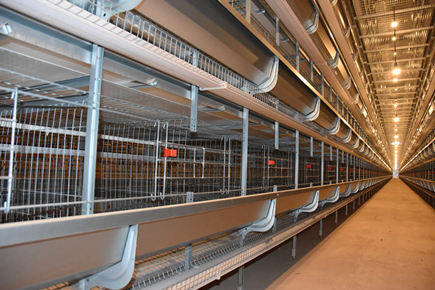
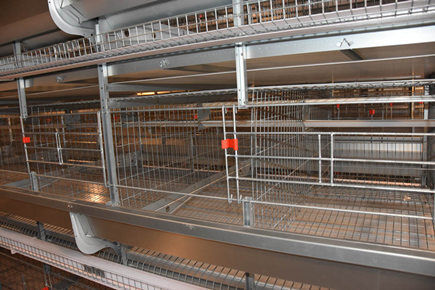
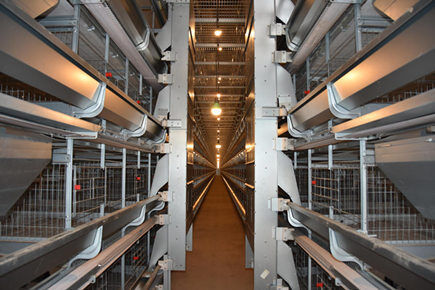
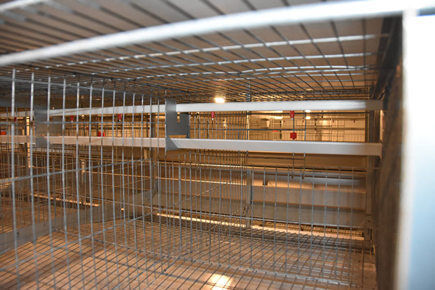
Best finished 1.800 units of layer battery cage for 20,500 layers. This layer project is carried out to help solve our customer’s issue regarding layer battery cage. The customer's farm is an integrated farm, and the breeding capacity of the first layer project is 20,000. The layer layout we designed for customers is 2 rows and 5 tiers, which can adopt natural ventilation to save climate control costs
The dimension of house is 77.0m long, 7.0m wide and 5.0m high
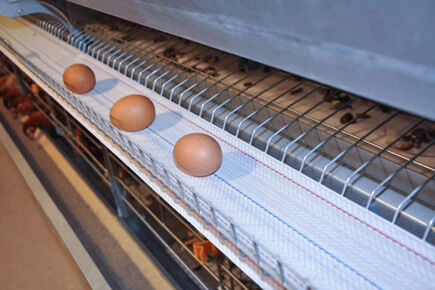
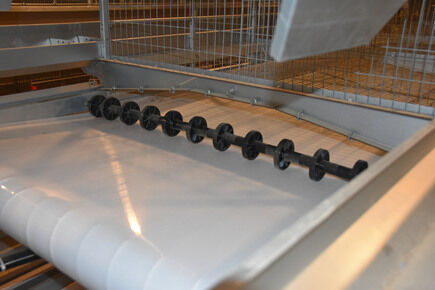
Layer cages using our Luoto 1800, are equipped with fully automatic systems. Including automatic feeding system, automatic drinking system, automatic egg collection system and automatic manure removal system, this project is just the beginning and our collaboration continues
The layer battery cage is used in the chicken industry. But one thing to pay attention to when using is to prevent rust. However, environmental problems in battery cage for layers will directly affect the growth status and production efficiency of chickens
Therefore, our company recommends cleaning and disinfecting of the layer cage. Most of the cage is made of metal. Because it is metal, it will inevitably rust. If improper maintenance of the battery cage for layers if is not done will inevitably rust because of its metal component and it may be more corrosive
Specification list
The sizes of most customers choosing of chicken cage system/equipment and floor raising chicken system/equipment are
1. Egg laying chicken cage
128 birds/set, 4 tiers/set, 32 cells/set, 4 birds/cell, LXWXH/set: 2mX2.5mX2.12m, LXWXH/cell: 1960mmX350mmX380mm
2. Broiler chicken cage
120 birds/set, 3 tiers/set, 6 cells/set, 20 birds/cell, LXWXH/set: 1.1mX2.mX2.56m, LXWXH/cell: 1050mmX1000mmX635mm
3. Pullet chicken cage
96 birds/set, 4 tiers/set, 8 cells/set, 12 birds/cell, LXWXH/set: 1.25mX1.5mX2.9m, LXWXH/cell: 1200mmX600mmX625mm
4. Breeder chicken cage
280 female and 40 male/set, 4 tiers/set, 8 cells/set, 35 female and 5 male/cell, LXWXH/set: 3.66mX2.6mX3.7m, LXWXH/cell: 3600mmX1250mmX800mm
5. Broiler floor raising system/equipment
80 birds/m2, LXWXH/chicken house: 100mX10mX4m
6. Pullet floor raising system/equipment
100 birds/m2, LXWXH/chicken house: 100mX10mX4m
Components
1. It is constructed with galvanized steel
2. It has 8-degree floor slop for egg roll-out
3. It has a flexible cage floor
4. It has rust free PVC rail support
5. It improves manure roll off
6. The frames are sturdy with composite floor
Features
1. The cage system should meet current bird space standard. You need a modular belt cage system that offers easy shipping, improved egg roll-out and simplicity
2. It should have a sturdy construction, composite mesh floor and metal door latch
3. Other requirements include proper ventilation, solid rod floor support with tighter floor mesh spacing
4. It should be rugged, durable and made from galvanized steel. Look for one with full front horizontal doors and innovative interlocking parts
5. More important features are cage warranty, easy access to interior, water and feed
6. Make sure the cage has a good slop for egg roll out a choice of different high of 3 to 12 high
How to maintain the cage
1. Bring out equipment for cleaning
The battery cage for layers is designed with a galvanized mesh which is not easy to scratch under normal conditions. However, some impurities will adhere during use. Such as chicken feathers, feed and chicken manure. It took a long time. It may scab and harden. So we need to take it out for cleaning, do not rub with a stiff brush
2. Sterilization
The chickens in the battery cage for layers should be kept at a very high density. Therefore, disinfectant is used. If the disinfection is not clean, bacteria and viruses will easily remain. This is not conducive to future feeding and disease prevention. Pay attention to the rotation and dosage of disinfectants during disinfection
3. Dust the equipment
Always sweep or blow dust some dirt off the ceilings, light fixtures, walls, nest boxes, fans, air inlets etc. onto the floor. Remove all feed from feeders. Scrape manure and accumulated dust and dirt from perches and roosts. Remove all litter from the floor. Litter can be added to a compost pile. Sweep the floor to remove as much dry material as possible. With a small coop, a wet-dry shop vacuum does a good job of removing this material
4. Wet Cleaning of the parts
Turn off the power to the building prior to using any water for cleaning, wet cleaning is done in three steps which are soaking, washing and rinsing. Warm or hot water will do a better job getting through organic matter than cold water. You can use a cheap neutral detergent, like dish soap
5. Soak the tough area
Soak the heavily soiled areas such as the perches and roosting areas, floors thoroughly. Use a low pressure sprayer to totally soak all surfaces. Soak until the accumulated dirt and manure has softened to the point it is easily removed
6. Wash the equipment
A high pressure sprayer is good for this step, but manual scrubbing with a moderately stiff brush is one of the best ways to insure a thorough cleaning. Inspect manually to be sure you have removed all of the dirt and manure from all surfaces. Make sure you carefully clean electrical parts. You may have to remove cover plates and vacuum those areas
7. Rinse the equipment
Do a final rinse immediately after washing is recommended to remove any harmful residues and to obtain a spotless building. Mop up puddles as they can rapidly become breeding grounds for salmonellae
Our services
1. We offer the best poultry equipment which can meet our customers every requirement
2. We have long time and rich experience on the products manufacturing. If any machine operation questions after sales, we will reply you within 24 hours with solutions. And customer can be rest assured
3. We recommend suitable products based on customer’s availability resources
4. We provide free house design to help customer build well-structured and modern pen
5. We offer training to our customers for those who have no knowledge about poultry business
6. Our poultry equipment’s are made with high and durable materials
Frequently ask questions
Q: Why do I need to introduce poultry equipment into my poultry farm?
A: With the introduction of poultry equipment on the farm, work around the farm is easy and less stressful. There are many types of poultry equipment available which are necessary for successful poultry farming
Q: What poultry equipment can I use for the hatching of eggs?
A: You can make use of the incubator it works for the hatching of the chicken eggs to produce young chickens known as pullets
Tag
Search
Hot product
 HK Headquarter Offers EU-standard Poultry Farm Solutions, Manufacture Poultry Farm Equipment1. Continuous communication with the EU and the US
2. China, Nigeria, Ethiopia, Tanzania branch companies and factories
3. The products’ quality is customized for local poultry farms
4. Poultry cage and poultry farm equipment stock for sale
5. 24 online reception Whatsapp NO. : +8618830120193,contact us to get full informationRead more China Branch Offer Poultry Farm Business Plan, Manufacture Poultry Farm Equipment1. Address: Flat/RM 2416, 24/F, Runxing Building, Youyi Nan Street, Shijiazhuang City, Hebei Province, China
2. Poultry cage and poultry farm equipment factory and stock for sale
3. Customized for local poultry farms
4. Quality and design are based on Euro
5. 24 online reception Whatsapp NO. : +8618830120193Read more Nigeria Branch Offer Poultry Farm Business Plan, Manufacture Poultry Farm Equipment1. Address: After Sinoma Office, 200 Meters Near Danco Filling Station, Lagos/Ibadan Expressway, Lagos State, Nigeria
2. Poultry cage and poultry farm equipment factory and stock for sale
3. Customized for Nigerian poultry farms
4. Quality and design are based on Euro
5. 24 online reception Whatsapp NO. : +8618830120193Read more
Contact us
Phone(whatsapp No. ):
E-mail:
Office 1 (Hong Kong):
Flat/RM A, 15/F, ManlyCommercial Building 15 Soy Street, Mong Kok
Office 2 (China Mainland):
Flat/RM 2416, 24/F, Runxing Building, Youyi Nan Street, Shijiazhuang City, Hebei Province