



News
Basic information
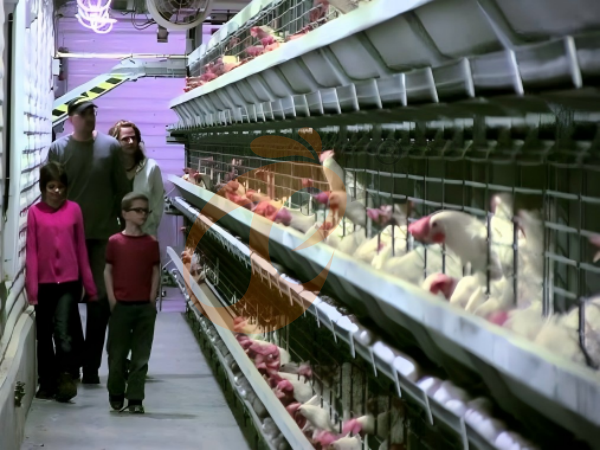
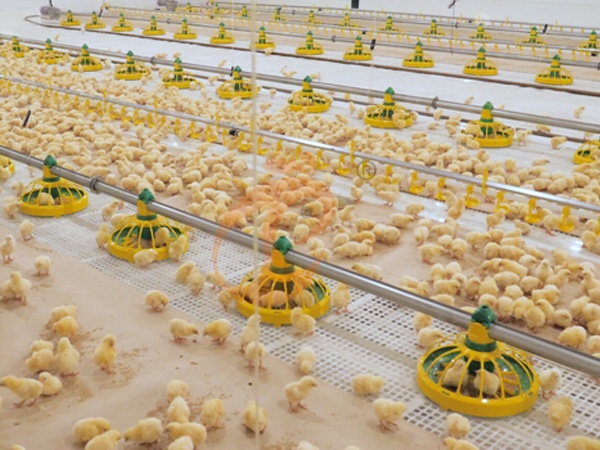
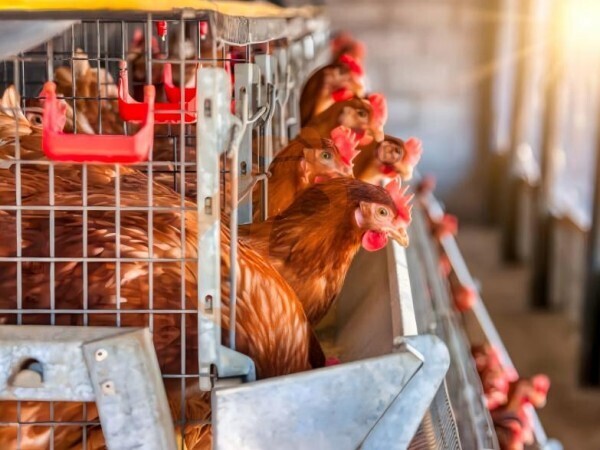
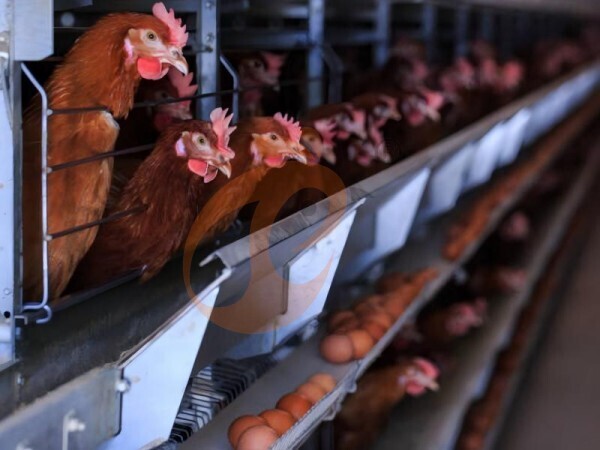
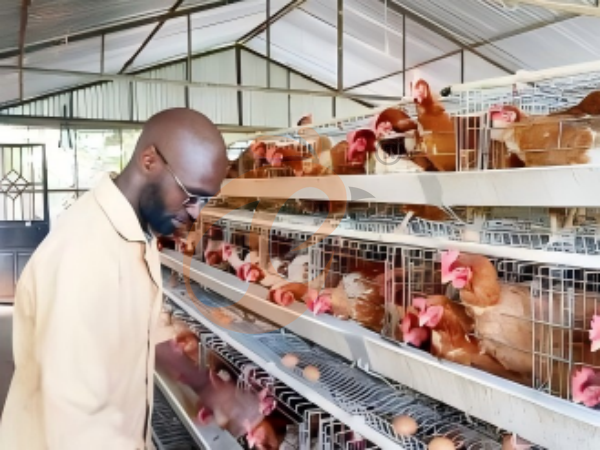
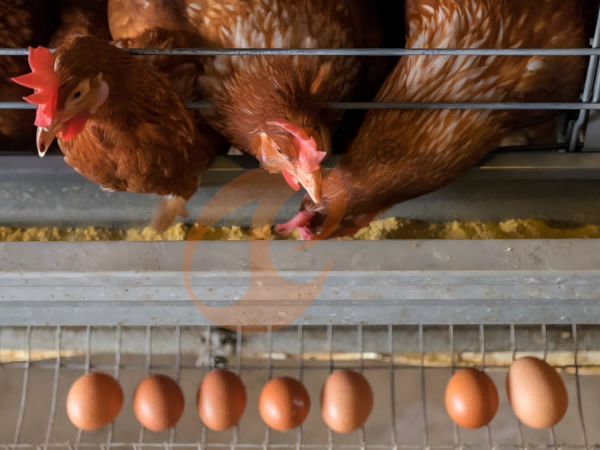
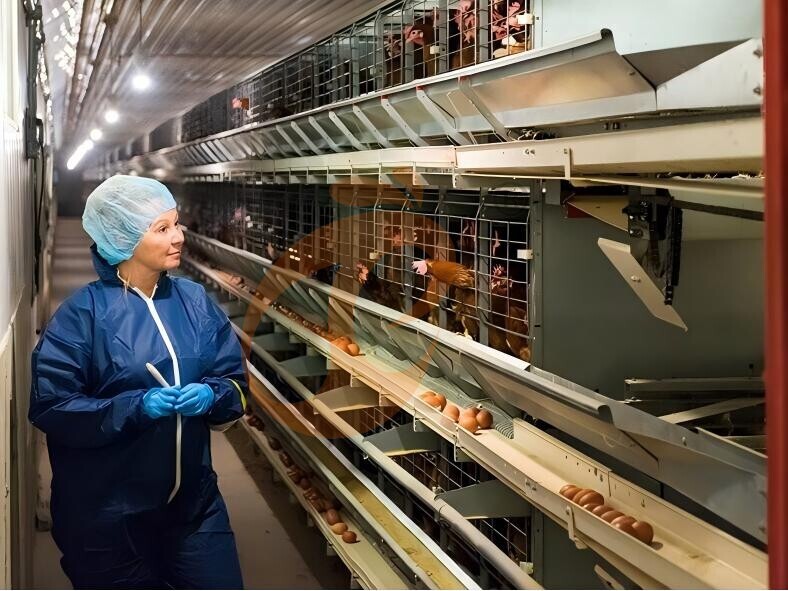
The poultry house has occupied a leading role in the agriculture industry worldwide in recent years. A comfortable or good poultry house should be in good areas that will directly affects the optimum growth and production in commercial poultry house, the poultry house refers to the method of housing chickens so that they can have the opportunity to roam around the poultry farm
Poultry house refers to the method of keeping domesticated birds such as chickens, ducks, and turkeys for the goal of producing meat or eggs for human use. In addition, poultry house has grown rapidly since it is very simple to set up and manage. Furthermore, there are various varieties of poultry houses, which you can group according to the species and age of the poultry house
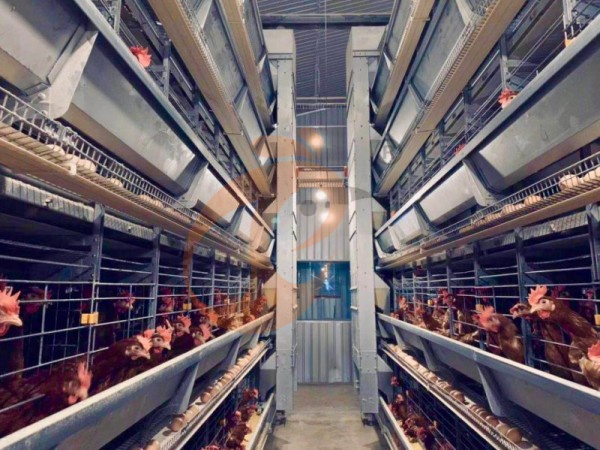
Additionally, the type of poultry house you design for your chickens may also be determined by its cost and upkeep method. It also depends on the birds’ needs at the various stage of their growth. Poultry houses have water lines, a droppings disposal system, and central heating and ventilation systems. Finally, their equipment is made at a factory to ensure that production processes are organized to the maximum extent possible
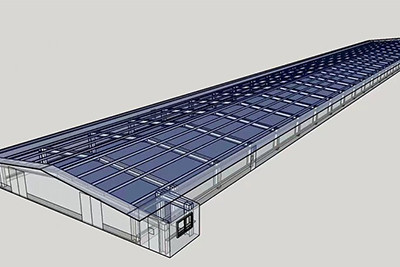
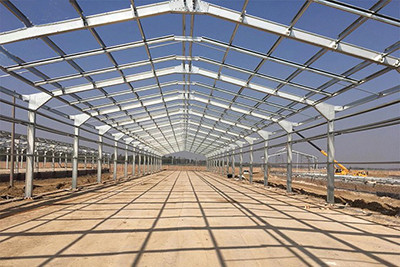
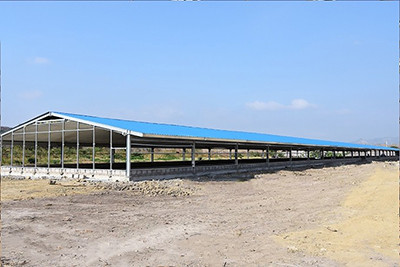
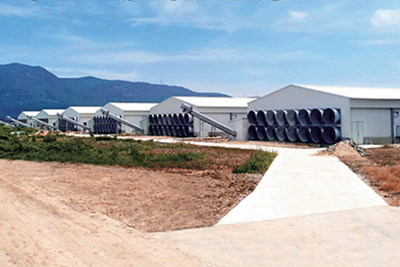
Features
1. The poultry house must have to be well ventilated
2. Ensure sufficient entrance of sunlight and fresh air inside the poultry house
3. It will be better if the house become situated north to south faced
4. If you make several houses, then the proper distance of one house to another house is about 40 feet
5. Clean the house properly before keeping the birds inside the poultry house
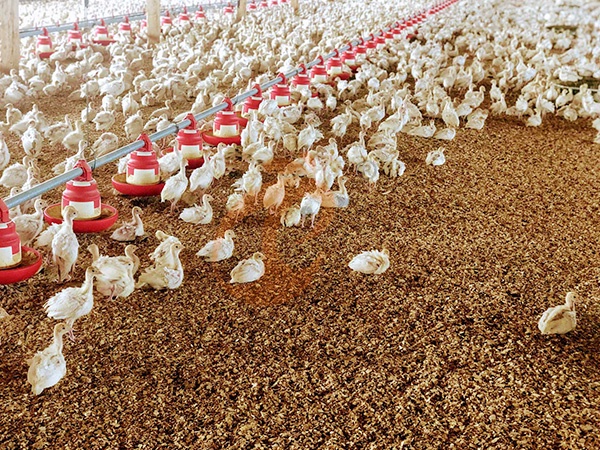
6. Make a deep liter of the poultry house and keep it dry and clean always
7. Build the poultry house in such a place where all the poultry birds are free from all types of wild animals and other predators
8. The poultry house area should be free from loud sound/sound pollution
9. Make the poultry house in quiet and calm place
10. It will be better if you can build the house in an open air place
Customers part of the poultry growing business benefit from our customised solutions, visiting our page of products to learn more
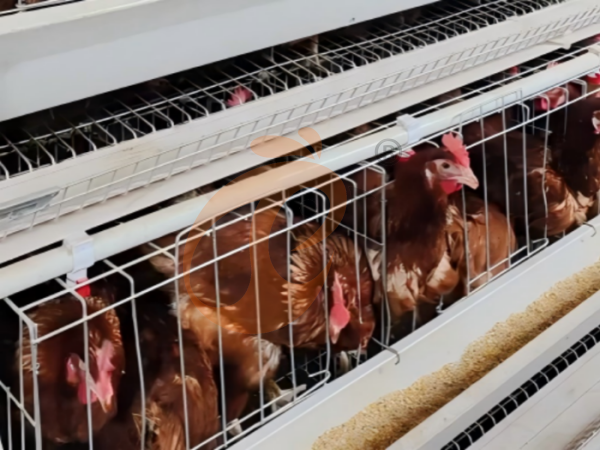
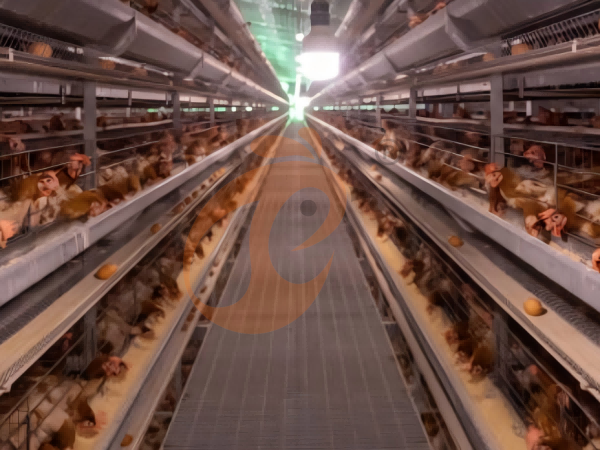
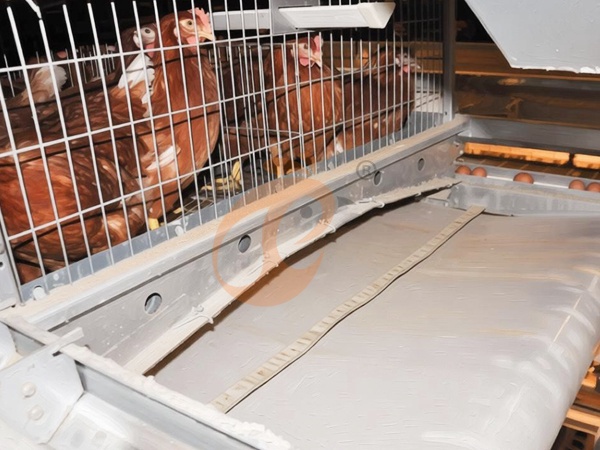
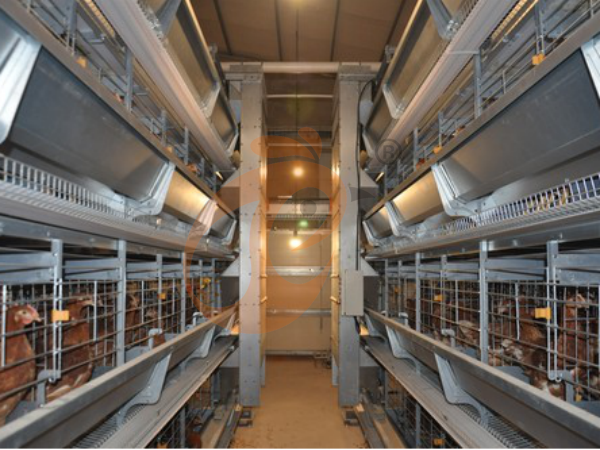
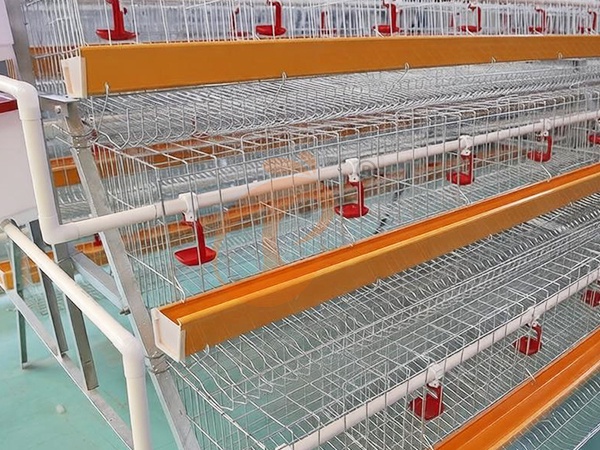
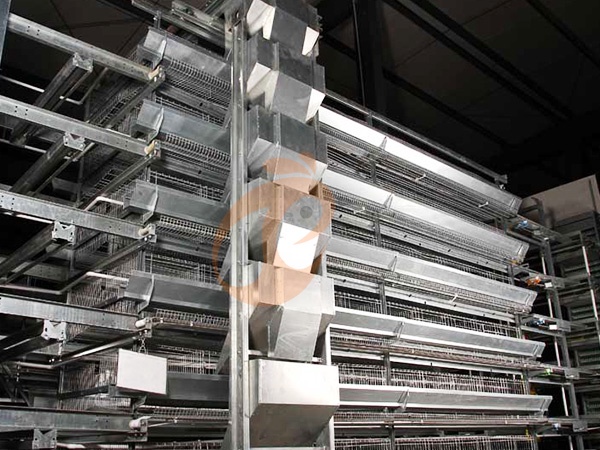
1. Egg laying chicken rearing system
The one stop shop and solution of turnkey poultry farm project, contact us to give you full solution from the designing of poultry house, layout and quotation of poultry equipment and cages, delivery and installation...
Basic requirements for poultry house
1. Space (density of birds per unit area)
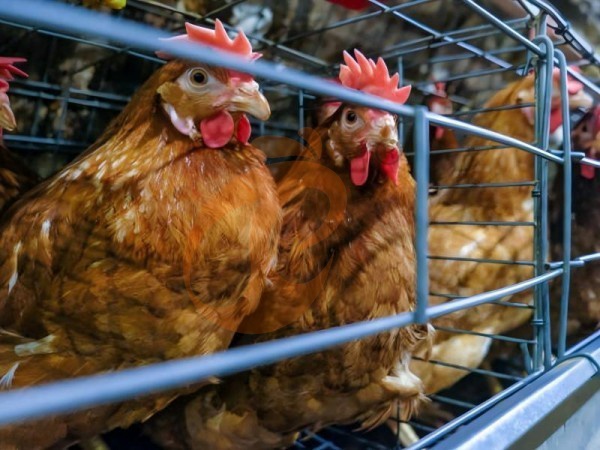
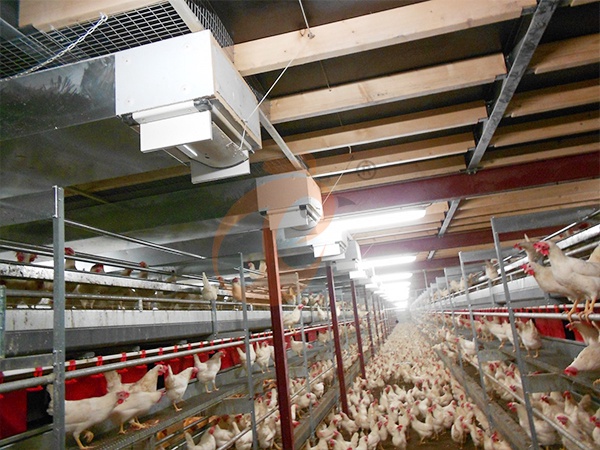
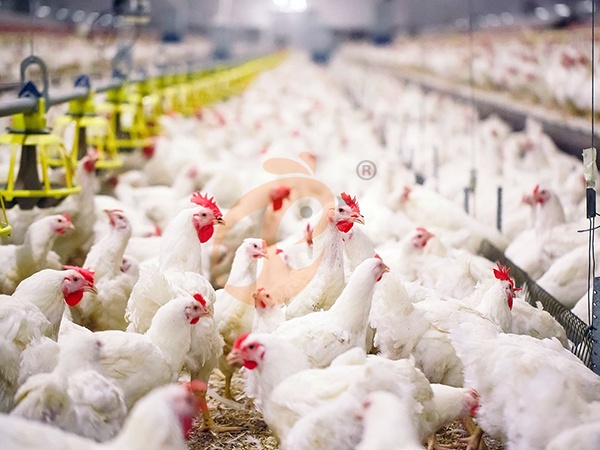
This is the most important basic principle in poultry house, as the space available determines the number and type of poultry birds that can be kept. For example, a deep litter house measuring 6 m by 11 m can hold 200 laying hens at a stock density of 3 birds/m2 (3.6 ft2/bird) Under the older system of measuring, stock density was measured in ft2 per bird, which is the inverse of birds per m2 used in the metric system, incorporating a conversion factor of 0.0929 m2/ft2 (for details, see the appendix entitled Abbreviations and Conversions). Hen groups are comfortable at a stock density of three to four birds per square meter. If more space is allowed, a greater variety of behavior can be expressed. Less space creates stressed social behavior, allowing disease vulnerability and cannibalism and leaving weaker birds deprived of feed or perch space. Individual birds need more room for normal behavior and adequate exercise than the 22 birds/m2 (0.5 ft2/bird] density currently used in commercial laying cages. Over recent decades, animal welfare concerns have encouraged research on poultry house structures to make designs better suited to the needs of hens, while retaining cost-effectiveness for production
2. Light (duration and intensity)
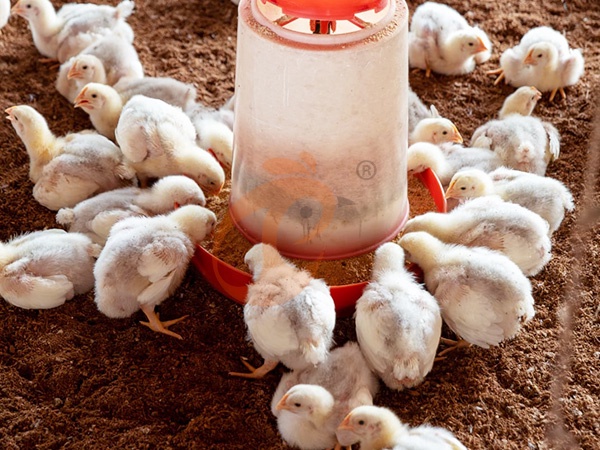
A well-lit house is essential in poultry house. A dark house leads to lethargic, inactive, unproductive birds. Light is important for feeding, as poultry identify food by sight. This is especially important for intensively managed day-old chicks, which need very bright 24-hour lighting for their first week of life. Light is also an important factor in sexual maturity. An increasing light proportion in the day, as naturally occurs from mid-winter to mid-summer, will accelerate sexual maturity in growing pullets, bringing them to lay sooner. If hens are already lying, the increasing light proportion will increase egg production. The opposite effect is also true: as the light proportion of the day decreases (as naturally occurs from mid-summer to mid-winter), then sexual maturity is slowed in growing stock, and egg production is reduced in laying hens. These effects are somewhat reduced towards the equator, as the difference in the daylight proportion of a day changes less and less
3. Ventilation (air flow)
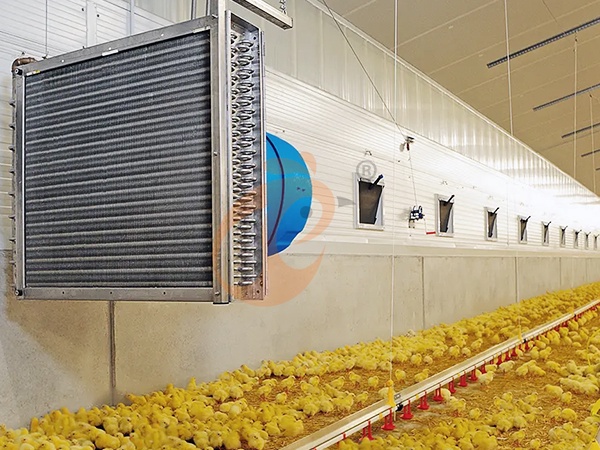
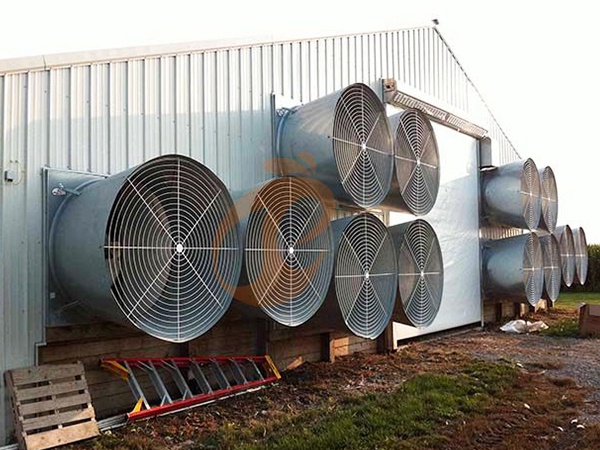
Ventilation is an important factor in poultry house. A building with open sides is ideal, otherwise cross-ventilation at bird-level should be allowed for in the form of floor level inlets, open in a direction to allow the prevailing wind to blow across the width of the building. An air mass between the side walls of a poultry house resists being moved, even across an open-sided building. The wider the building, the more the resistant it is to air movement. Buildings over 8 m (26 ft) wide have a significantly greater problem because of this inherent property of air to resist movement. It is recommended that buildings relying on natural airflow for ventilation should not exceed 8 m in width. Heat stress is a significant constraint to successful production and can lead to death. Although birds can withstand several degrees below freezing, they do not tolerate temperatures over 40 °C, this depends on the relative humidity prevailing at the time
4. Protection (shelter sheds and buildings)
Many factors influence the type and choice of poultry house to protect the birds from the effects of weather and predators. These include the local climate, the available space, the size of the flock and the management system. In extensive systems, birds must be protected from disease and predators but also be able to forage. Traditional large animal fencing using live plants is not enough protection against predators such as snakes, kites, rats and other vermin
Principles
1. Poultry house should be located away from residential and industrial area
2. It should have proper road facilities
3. It should have the basic amenities like water and electricity
4. Availability of farm labors at relatively cheaper wages
5. Poultry house should be located in an elevated area and there should not be any water-logging
6. It should have proper ventilation
Our services
1. We ensure the best for our customers
2. We render the best division of agricultural industry
3. We primarily focus on bespoke commutation
4. We are base on bringing out the best poultry equipment
5. We ensure good communication
6. We bring best of our ability
Frequently ask questions
Q: Is space needed for chicken in poultry house?
A: Yes space is needed for chicken in poultry house
Q: Is light require or important in poultry house?
A: Yes light is require or important in poultry house for the feeding as poultry is indentify as food by side
Q: were should poultry house be located?
A: Poultry house should be located away from residential and industrial area
Q: Can poultry house have basic amenities like water?
A: Yes poultry house should have basic amenities like electricity and water
FAQ
Product Recommendations
 Deep Litter Poultry Farming System Cost Analysis: Five Core Expenses And Long-Term Economic Returns1. Commercial poultry systems require precise environmental and feed control
2. Litter management directly affects flock health and production efficiency
3. Automated equipment improves consistency and reduces operational labor costs
4. Biosecurity and ventilation determine long-term farm profitability outcomes
5. Reception /WhatsApp NO. : +8618830120193Read more Free Range Poultry Farming Cost | 5 Major Expense Components1. Engineering cost structure determines overall poultry production efficiency
2. Feed optimization strongly influences long term farm profitability outcomes
3. Infrastructure planning directly affects operational stability and scalability performance
4. Market pricing strategies improve revenue balance across production systems
5. Reception /WhatsApp NO. : +8618830120193Read more How To Use Layer Chicken Cage Systems | 6 Practical Steps For Poultry Farms1. Modern layer chicken cage systems engineered for scalable poultry production
2. Structured cage equipment designed for commercial egg farming efficiency
3. Automated poultry systems supporting global farm infrastructure development
4. Turn-key engineering solutions for intensive poultry housing projects
5. Reception /WhatsApp NO. : +8618830120193Read more How To Use Broiler Chicken Cage Systems | 6 Practical Steps For Poultry Farms1. Broiler farming systems enhance modern poultry production efficiency
2. Automated equipment stabilizes feeding and environmental control processes
3. Proper cage management improves flock health and uniform growth
4. Industrial poultry operations increase output with reduced labor input
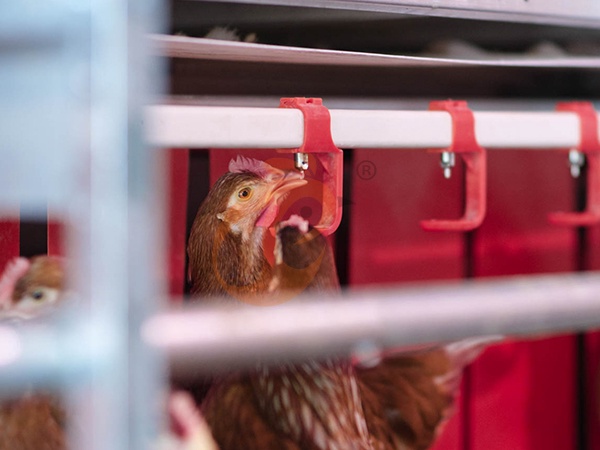
5. Reception /WhatsApp NO. : +8618830120193Read more How To Use Nipple Drinkers | 6 Practical Steps For Chicken Farms1. Hydraulic nipple system improves poultry water distribution stability.
2. Installation precision ensures uniform drinking line performance efficiency.
3. Calibration process controls pressure across growth stages accurately.
4. Maintenance scheduling reduces contamination and mechanical failure risk.
5. Reception /WhatsApp NO. : +8618830120193Read more How To Use Pralson Feeders | 6 Practical Steps For Chicken Farms1. Controlled poultry feeding improves uniform growth performance efficiency
2. Automated systems stabilize feed distribution across chicken farms
3. Mechanical calibration reduces feed waste and operational cost
4. Industrial poultry engineering supports scalable production system management
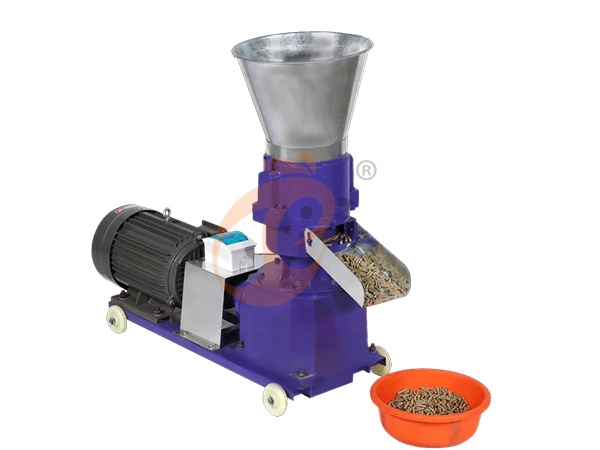
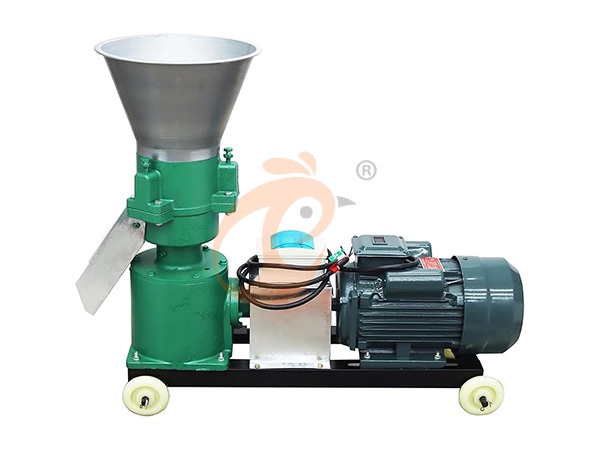
5. Reception /WhatsApp NO. : +8618830120193Read more How To Operate A Pellet Machine | 6 Practical Steps For Farms1. Modern feed production improves efficiency in poultry farming
2. Proper operational steps ensure stable industrial equipment performance
3. Regular maintenance extends machinery lifespan and reduces downtime
4. Controlled processing enhances nutritional consistency for livestock systems
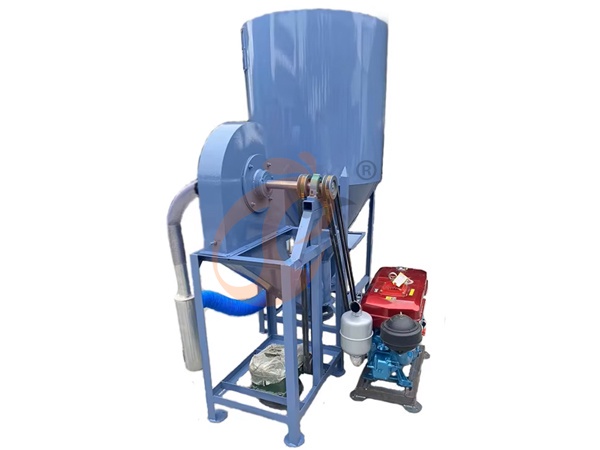
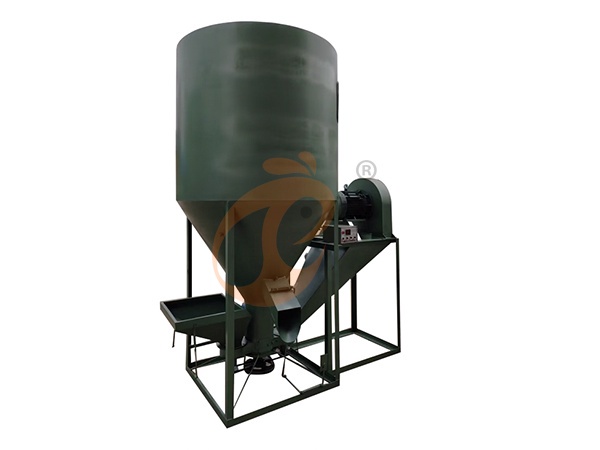
5. Reception /WhatsApp NO. : +8618830120193Read more Feed Mixer For Chicken Farms | How To Choose The Best System1. Feed mixer system engineering improves poultry production consistency
2. Industrial automation reduces operational labor dependency in farms
3. Uniform nutrient blending stabilizes flock growth performance metrics
4. Mechanical design optimization increases feed production throughput efficiency
5. Reception /WhatsApp NO. : +8618830120193Read more Modern Poultry Battery Cage System: Cost Structure and Engineering Determinants1. Industrial cage system integrates multi module livestock engineering architecture
2. Galvanized steel structure ensures long term corrosion resistance stability
3. Automation systems regulate feeding egg collection and manure processing
4. Scale expansion reduces per bird capital allocation significantly
5. Reception /WhatsApp NO. : +8618830120193Read more Why Choose H Type Layer Cage Systems For Commercial Chicken Farms?1. Advanced automation technologies improve commercial poultry production management efficiency
2. Scientific ventilation engineering supports healthier flocks and stable productivity
3. Automatic feeding equipment reduces operational costs and feed consumption
4. Integrated environmental control systems improve long-term poultry farm profitability
5. Reception /WhatsApp NO. : +8618830120193Read more How Does An A-Type Battery Cage For Layers Work? 5 Practical Facts Explained1. Commercial poultry systems improve operational efficiency through automated environmental management
2. Modern galvanized housing structures support stable long-term farming performance
3. Integrated feeding equipment improves nutritional consistency throughout production cycles
4. Controlled ventilation conditions reduce environmental stress inside poultry facilities
5. Reception /WhatsApp NO. : +8618830120193Read more Winter Heating Installation Tutorial: Hot Question & Usage Advice1. Stable environmental control improves winter poultry production efficiency
2. Professional heating engineering reduces poultry farming operational expenditure
3. Smart automation systems improve airflow circulation and thermal management
4. Industrial poultry equipment supports reliable commercial farming operation
5. Reception /WhatsApp NO. : +8618830120193Read more Poultry Farming Equipment Price Guide: Top Google Types & Recommendations1. Industrial systems improve farm efficiency and production stability
2. Automated equipment reduces labor and operational management costs
3. Climate controlled environments enhance poultry growth performance consistency
4. Precision engineering supports scalable and integrated farming solutions
5. Reception /WhatsApp NO. : +8618830120193Read more Poultry Farming Tools Price Check: Popular Models & User Reviews1. Industrial automation improves poultry production efficiency and operational stability.
2. Environmental control systems support long-term livestock production consistency.
3. Feed management optimization reduces waste and improves farm profitability.
4. Engineering design enhances structural durability and maintenance efficiency.
5. Reception /WhatsApp NO. : +8618830120193Read more Environmental Control System Price Trends: Google Search Keywords & Recommended Options1. Ventilation systems regulate airflow in poultry house environments
2. Cooling pads control temperature under high density farming conditions
3. Automation sensors improve environmental stability and operational efficiency levels
4. Regional cost variations reflect industrial poultry infrastructure development differences
5. Reception /WhatsApp NO. : +8618830120193Read more Chicken Coop Cleaning Equipment Price Check: Top Type & Cost Analysis1. Advanced sanitation systems improve environmental control during poultry production
2. Automated manure transport reduces labor demand inside commercial poultry houses
3. Industrial cleaning equipment supports stable poultry biosecurity management procedures
4. Robotic sanitation technology increases operational consistency in large-scale poultry farms
5. Reception /WhatsApp NO. : +8618830120193Read more Watering Equipment Price Trends: Market Popular & Recommended Models1. Poultry watering systems define hydraulic farm infrastructure engineering standards
2. Nipple drinker technology ensures controlled hydration efficiency in poultry houses
3. Drinking line systems distribute pressure across large scale poultry farms
4. Smart monitoring systems optimize water consumption and leakage detection control
5. Reception /WhatsApp NO. : +8618830120193Read more Feed Distribution Equipment Price Check: Top Popular & Recommended Models1. Feed automation improves uniform nutrition delivery across poultry houses
2. Rotary and chain systems enhance production efficiency in farms
3. Engineering design reduces feed loss and operational labor costs
4. Integrated systems support scalable industrial poultry production expansion
5. Reception /WhatsApp NO. : +8618830120193Read more How To Manage Deep Litter Poultry System | 6 Practical Tips1. Deep litter poultry system operates through microbial decomposition control
2. Poultry farming system efficiency depends on moisture and ventilation balance
3. Broiler management stability improves through structured litter engineering
4. Poultry equipment design supports controlled environmental production systems
5. Reception /WhatsApp NO. : +8618830120193Read more How To Manage Free Range Poultry Farming | 6 Practical Daily Tips1. Free range poultry systems require precise environmental control management
2. Structured feeding schedules improve production stability and efficiency outcomes
3. Biosecurity and housing design reduce disease and mortality risks
4. Rotational grazing supports land recovery and long term sustainability
5. Reception /WhatsApp NO. : +8618830120193Read more How To Manage Floor Rearing Poultry System | 6 Practical Daily Tips1. Controlled environmental systems improve poultry production efficiency significantly
2. Ventilation and feeding synchronization reduce mortality and stress levels
3. Litter and water management stabilize flock health and growth consistency
4. Precision monitoring enhances uniformity and operational performance stability
5. Reception /WhatsApp NO. : +8618830120193Read more Automatic Poultry Equipment For Sale | 5 Key Benefits For Farms1. Advanced automation improves operational stability across commercial poultry facilities
2. Precision environmental systems support healthier livestock production conditions globally
3. Integrated infrastructure reduces maintenance workload and operational resource losses
4. Industrial agricultural technology increases long-term poultry production profitability significantly
5. Reception /WhatsApp NO. : +8618830120193Read more Pellet Machine For Poultry | 5 Essential Tips To Boost Feed Quality1. Pellet machine enhances poultry feed processing efficiency significantly
2. Feed pellet systems improve uniform nutrition distribution effectively
3. Industrial poultry equipment supports large scale farm productivity systems
4. Feed optimization technologies reduce operational cost in poultry farms
5. Reception /WhatsApp NO. : +8618830120193Read more Feed Mill For Poultry | 5 Ways To Boost Chicken Feed Production1. Industrial poultry feed systems ensure stable chicken nutrition supply chains
2. Feed formulation precision improves poultry growth rate and efficiency output
3. Automation technology enhances production stability and reduces operational variation
4. Pellet quality control directly affects feed utilization and farm performance
5. Reception /WhatsApp NO. : +8618830120193Read more How To Get An Accurate Poultry Cage Quotation? 7 Buyer-Ready Steps1. Accurate poultry cage quotation requires structured engineering data input.
2. Cage system design determines poultry farm production efficiency outcomes.
3. Automation integration improves poultry farming equipment operational stability.
4. Material quality directly impacts long-term poultry cage durability performance.
5. Reception /WhatsApp NO. : +8618830120193Read more What Are H Type Chicken Cages And How Do They Work In Poultry Farms1. Scalable vertical poultry systems improve commercial farm efficiency
2. Automated feeding and egg collection reduce manual labor intensity
3. Controlled environment enhances stable production and bird health performance
4. Investment cost and output vary with system configuration levels
5. Reception /WhatsApp NO. : +8618830120193Read more What Is An A Type Battery Cage System For Poultry Farm? A Clear Buyer’s Guide1. Efficient housing structure supports organized commercial poultry farming operations
2. Automated feeding equipment improves daily management and production consistency
3. Integrated ventilation design maintains stable environmental farming conditions
4. Durable galvanized materials ensure long service life performance stability
5. Reception /WhatsApp NO. : +8618830120193Read more Layer Farming Equipment Recommendation: Comparison Review & Google User Questions1. Layer farming equipment structured for industrial poultry production systems
2. Automated systems improve egg output consistency and operational stability
3. Ventilation and manure systems maintain controlled poultry environment
4. Feeding precision directly impacts production efficiency and cost control
5. Reception /WhatsApp NO. : +8618830120193Read more Chicken House Equipment Installation Tutorial: Step-By-Step Guide1. Chicken house equipment installation tutorial supports automated poultry production systems
2. Industrial poultry equipment improves ventilation feeding and water distribution efficiency
3. Modern chicken house systems ensure stable environmental control performance
4. Automated poultry farming equipment increases production scalability and reliability
5. Reception /WhatsApp NO. : +8618830120193Read more Automated Auxiliary Equipment Installation Tutorial: Common Hot Searches Answered1. Automatic systems improve feeding precision inside modern poultry facilities
2. Ventilation management stabilizes poultry environmental production performance continuously
3. Egg transportation systems reduce operational labor management expenses significantly
4. Environmental monitoring technology improves poultry health condition management efficiently
5. Reception /WhatsApp NO. : +8618830120193Read more Temperature And Ventilation Installation Tutorial: Step By Step + Popular FAQs1. Efficient environmental control improves poultry production performance stability
2. Proper airflow design ensures uniform temperature distribution inside houses
3. Advanced sensor systems maintain accurate real time climate monitoring
4. Correct installation reduces energy consumption and improves system efficiency
5. Reception /WhatsApp NO. : +8618830120193Read more Manure System Installation Tutorial: Detailed Steps & Common Problem Solutions1. Efficient waste transport ensures stable poultry house environmental conditions
2. Accurate installation improves system durability and operational consistency
3. Optimized parameters reduce energy consumption and maintenance frequency
4. Automated processes enhance farm productivity and labor efficiency
5. Reception /WhatsApp NO. : +8618830120193Read more Chicken Coop Water System Installation Tutorial: Piping Layout & Practical Tips1. Hydraulic poultry drinking networks ensure stable farm water distribution
2. Modular pipe layouts improve pressure balance across chicken housing systems
3. Nipple drinker systems regulate controlled water intake for poultry flocks
4. Proper installation reduces contamination risk and maintenance workload significantly
5. Reception /WhatsApp NO. : +8618830120193Read more Poultry Feeder Installation Tutorial: Layout, Safety & Usage Tips1. Poultry feeder installation improves industrial feeding precision across farms
2. Structured feeder layout enhances uniform flock growth distribution performance
3. Mechanical calibration reduces feed waste in poultry production systems
4. Automated feeding integration stabilizes large scale poultry farm efficiency
5. Reception /WhatsApp NO. : +8618830120193Read more Deep Litter Poultry System Setup | 7 Essential Steps1. Efficient litter management improves poultry production performance
2. Optimized housing design supports controlled ventilation and moisture balance
3. Nutrient recycling enhances sustainable agricultural integration systems
4. Accurate density control reduces disease risks and improves output
5. Reception /WhatsApp NO. : +8618830120193Read more Free Range Poultry System Setup | 7 Essential Planning Steps1. Outdoor poultry management improves bird welfare and production stability
2. Balanced poultry nutrition supports stronger immunity and faster daily growth
3. Scientific poultry housing reduces disease risks and environmental pressure
4. Commercial poultry planning increases operational efficiency and long-term profitability
5. Reception /WhatsApp NO. : +8618830120193Read more Floor Rearing System Setup | 7 Essential Steps For Poultry Houses1. Efficient poultry house design ensures stable production and performance
2. Optimized environmental control improves bird growth and health
3. Integrated systems reduce labor cost and increase efficiency
4. Scientific management supports consistent output and profitability
5. Reception /WhatsApp NO. : +8618830120193Read more Layer Battery Cage Vs Floor System | Price & Return On Investment Comparison1. Commercial poultry systems compared through investment and efficiency data
2. Battery structure improves density feed control and production stability
3. Floor system supports premium pricing through market differentiation strategy
4. Return on investment varies depending on capital structure and operational cost balance
5. Reception /WhatsApp NO. : +8618830120193Read more Automatic Vs Manual Broiler Chicken Cage | Price & Efficiency Comparison1. Automatic cage system improves poultry production efficiency per cycle
2. Manual cage system requires higher labor input and management effort
3. Feed efficiency directly impacts total farming profitability performance
4. Environmental stability improves survival rate and growth uniformity
5. Reception /WhatsApp NO. : +8618830120193Read more Automatic Vs Manual Nipple Drinkers | Price & Efficiency Comparison1. Automatic drinking systems improve poultry farm water efficiency performance
2. Manual systems increase labor requirement and water waste levels
3. Investment comparison shows long term profitability difference clearly
4. Reliable poultry water delivery ensures stable production output
5. Reception /WhatsApp NO. : +8618830120193Read more
Search
Hot product
 IoT Poultry Farming System1. CO₂ 0–5,000 ppm range
2. NH₃ 0–100 ppm
3. RH ±3%
4. Thresholds in the 10–25 ppm range
5. Reception /WhatsApp NO. : +8618830120193Read more Overall Structure IoT System In The Farm1. Breeding planning framework
2. CCTV
3. Poultry digital platform - comprehensive large screen
4. Alarm management
5. Reception /WhatsApp NO. : +8618830120193Read more Poultry House Environmental Control Smart IoT System1. Precision ventilation
2. Full site equipment control
3. Self diagnosis alarm system
4. European standard hardware
5. Reception /WhatsApp NO. : +8618830120193Read more

Contact us
Phone(whatsapp No. ):
E-mail:
Office 1 (Hong Kong):
Flat/RM A, 15/F, ManlyCommercial Building 15 Soy Street, Mong Kok
Office 2 (China Mainland):
Flat/RM 2416, 24/F, Runxing Building, Youyi Nan Street, Shijiazhuang City, Hebei Province